
Why Laundry Businesses Experience Rush Seasons
Laundry demand does not remain constant throughout the year.
Some weeks feel normal, while others suddenly become extremely busy.
Most laundry shop owners notice this pattern during:
festival seasons
wedding periods
winter months when woolen garments require cleaning
weekends in residential areas
Imagine a small laundry shop on a typical weekday.
Orders come steadily, machines run at a comfortable pace, and staff has enough time to sort clothes properly.
Now imagine the same shop three days before a major festival.
Customers walk in carrying bags of clothes and everyone wants quick service.
Without preparation, the situation can quickly become chaotic.
That’s why managing rush seasons properly is important.
When Peak Demand Usually Happens
Certain periods consistently bring higher demand for laundry services.
Common busy periods include:
wedding seasons
festival weeks
winter months for woolen cleaning
weekends in residential neighborhoods
These demand spikes are temporary but place heavy pressure on operations.
Understanding these cycles helps shop owners prepare in advance.
What Actually Goes Wrong During Rush Periods
During busy weeks several problems often appear simultaneously.
Machines run continuously.
Sorting areas become crowded with garments.
Staff becomes tired and mistakes increase.
Sometimes clothes from different orders get mixed up because tagging systems break down under pressure.
In many cases, the real issue is not the number of orders.
The real issue is workflow management.
When the process becomes unclear, even a moderate increase in orders can disrupt operations.
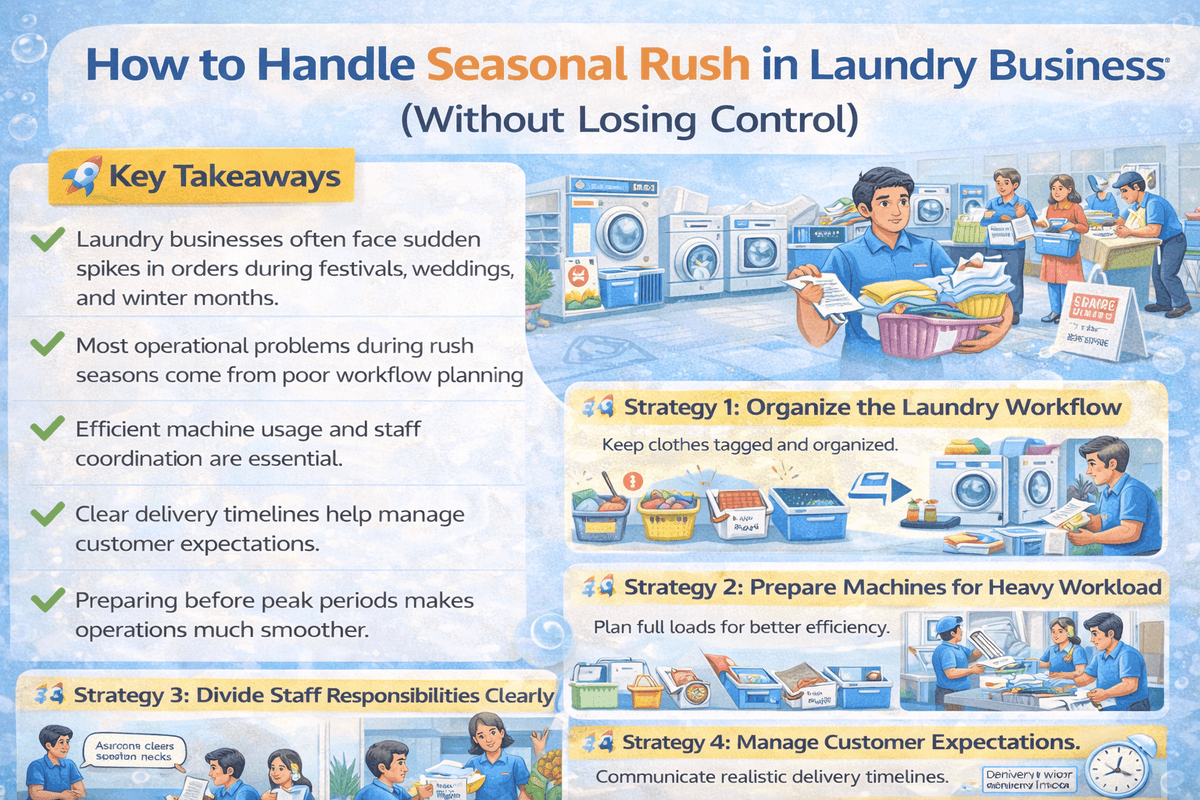
Strategy 1: Organize the Laundry Workflow
Laundry operations usually follow a clear sequence:
order collection and tagging
sorting garments by fabric type
washing
drying
ironing and folding
packaging and delivery
During rush periods this sequence must remain disciplined.
If sorting is skipped or tagging becomes careless, confusion spreads quickly.
Many laundries use simple systems such as color-coded baskets or numbered tags to keep orders organized.
These small systems prevent chaos during busy periods.
Strategy 2: Prepare Machines for Heavy Workload
Machines carry most of the workload during rush seasons.
Running them efficiently becomes critical.
A common mistake is running several small loads instead of waiting for full loads.
Full loads improve machine efficiency and reduce electricity costs.
Planning wash cycles in advance also prevents machines from sitting idle between batches.
Strategy 3: Divide Staff Responsibilities Clearly
During rush periods confusion among staff often slows down operations.
Instead of everyone doing everything, responsibilities should be clearly divided.
For example:
one person focuses on washing
another handles ironing
one manages sorting and packaging
Clear roles prevent bottlenecks and keep work moving steadily.
Some shops also hire temporary helpers for ironing during busy weeks.
Strategy 4: Manage Customer Expectations
During peak seasons customers often expect faster delivery.
But promising unrealistic timelines creates problems.
A better approach is transparent communication.
For example:
“Delivery will take two days due to festival rush.”
Customers usually understand if expectations are communicated early.
Some laundries also introduce express service options for urgent orders at an additional charge.
Strategy 5: Temporary Capacity Expansion
When demand spikes temporarily, shops can expand capacity for a short period.
Common approaches include:
extending working hours
running machines in additional shifts
hiring temporary helpers
outsourcing some orders to partner laundries
These adjustments allow shops to handle larger order volumes without compromising service quality.
FAQs
When does the laundry business experience rush season?
Rush periods usually occur during festivals, wedding seasons, winter months, and weekends.
How can a laundry shop manage high order volume?
Organized workflow, efficient machine use, and clear staff responsibilities help manage large volumes of orders.
Should laundry businesses increase prices during peak season?
Most shops maintain regular pricing but may introduce express service charges for urgent orders.
What is the biggest challenge during laundry rush season?
Maintaining accurate order tracking while handling large volumes of garments.
Final Thoughts
Seasonal rush periods can feel overwhelming for laundry businesses.
But they also represent opportunities.
Higher order volumes mean higher revenue — if operations stay organized.
When workflows are structured, machines are used efficiently, and staff responsibilities are clear, even busy periods can run smoothly.
Many experienced laundry owners eventually look forward to these seasons because they bring some of the strongest sales of the year.
Ready to turn this into a business?
Learn the machines, chemicals, operations and pricing behind a successful laundry business, or verify a completed course, with GILM.